
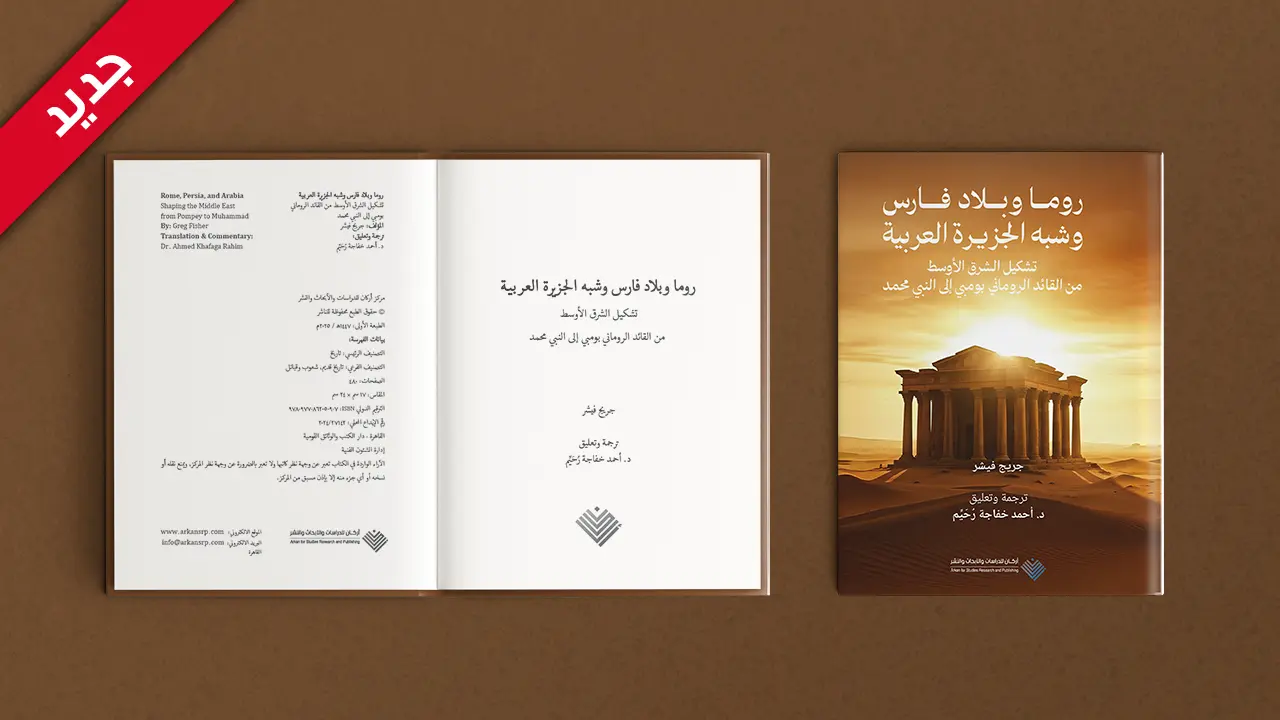
| ISBN |
|---|
| 978-977-86205-9-7 |
| Author |
| Greg Fisher |
| Translation & Annotated |
| Dr Ahmed Khafaga Rukhayyim |
| Edition |
| First edition, 2025 |
| Language |
| Arabic |
| Main category |
| History |
| Subcategory |
| Ancient History; Peoples and Tribes |
About the Book
Rome, Persia, and Arabia examines the attempts by the great powers of antiquity to exert influence over the Arabs and the Arabian Peninsula in the period between the arrival of Roman forces in the Middle East under the command of Pompey in 63 BC and the death of the Prophet Muhammad (peace be upon him) in AD 632. It offers a detailed account of the ways in which these powers shaped the politics, culture and religion of the Arabs, and of how the emerging Arab tribes navigated the complex political landscape between the Roman, Parthian and Persian empires. The book also discusses the destruction of heritage in the Middle East and the deliberate vandalism inflicted upon it by ISIS, and examines how Arab Christianity developed across the region, as well as the rise of powerful Arab states and leaders in the final century before the advent of Islam. In doing so, it presents a clear picture of the significance of the Arabs and the Arabian Peninsula for understanding contemporary regional and global history.
In that later period of antiquity, the Arab powers proved their importance in maintaining the balance of power in the Middle East, as the flames of conflict raged between the great empires, each seeking to win over the Arab powers and secure their allegiance. Consequently, these Arab powers continued to grow until they became major states and kingdoms that succeeded in making significant inroads into the complex political landscape between those empires. Numerous prominent Arab leaders emerged, and as the sixth century AD drew to a close, the seeds of new portents began to germinate, paving the way for remarkable new changes that would reshape the Middle East at the dawn of the seventh century AD. These changes helped to bring the era of late antiquity to an end and to inaugurate a new era that left its mark not only on the history of the Middle East but on the entire world: the era that began with the birth of the Prophet Muhammad (peace be upon him).






Leave A Comment